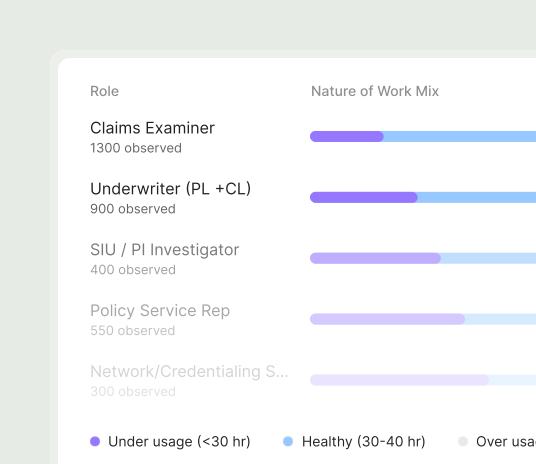
14,000+
hours/year of automation-ready effort
Before, it was turn on AI and hope. Now we know exactly which processes to automate, what we'll save, and how to prove we got there.

Process Intelligence

Skan AI sees how work really happens across every application, turning it into the maps, metrics, and opportunities your operations actually need. For teams building their foundation, understanding how process mining works is the practical starting point before moving to full process intelligence deployment.

Events processed
Processes mapped
Enterprise apps observed

Observe work across systems, teams and
workflows, including the exceptions, workarounds and decisions that reporting never captures.
Identify where work slows down, where variability creeps in and where operational performance is being lost.
Prioritize the changes that will have the greatest impact, backed by evidence rather than assumptions.

A lightweight desktop agent watches how work gets done — every click, every app, every handoff — without disrupting the people doing it. You control exactly what's captured.
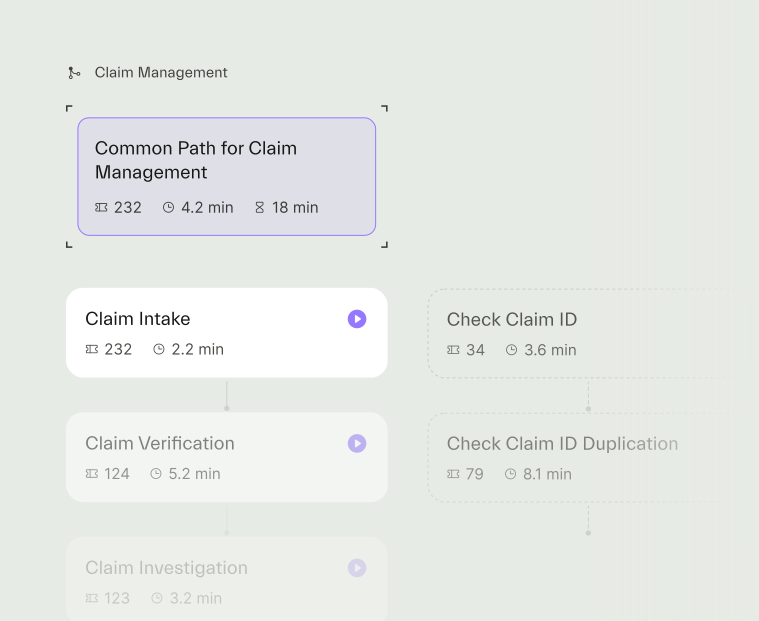
End-to-end process maps
Variant analysis
Exception paths and rework loops

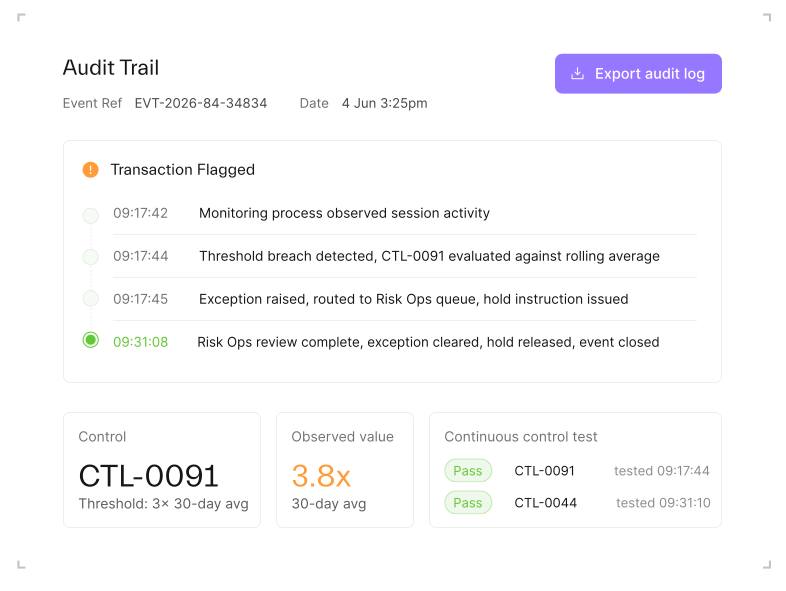
Real-time exception detection
Root cause analysis
Continuous audit trail
Process intelligence is the practice of observing, analyzing, and understanding how work actually flows through an organization. It provides visibility into workflows, bottlenecks, process variations, handoffs, and operational dependencies across systems and teams.
Traditional process mining relies primarily on system event logs. Process intelligence combines system data with observed work activity to capture the full reality of how work gets done, including manual steps, workarounds, exceptions, and cross-system interactions that logs alone may miss.
Organizations cannot effectively improve processes they do not fully understand. Process visibility helps leaders identify bottlenecks, delays, rework, and inefficiencies, enabling improvement efforts to focus on the areas with the greatest operational and financial impact.
Process intelligence can reveal bottlenecks, process variation, unnecessary handoffs, rework loops, manual workarounds, delays, compliance risks, and other sources of operational friction that affect productivity, cost, and customer outcomes.